
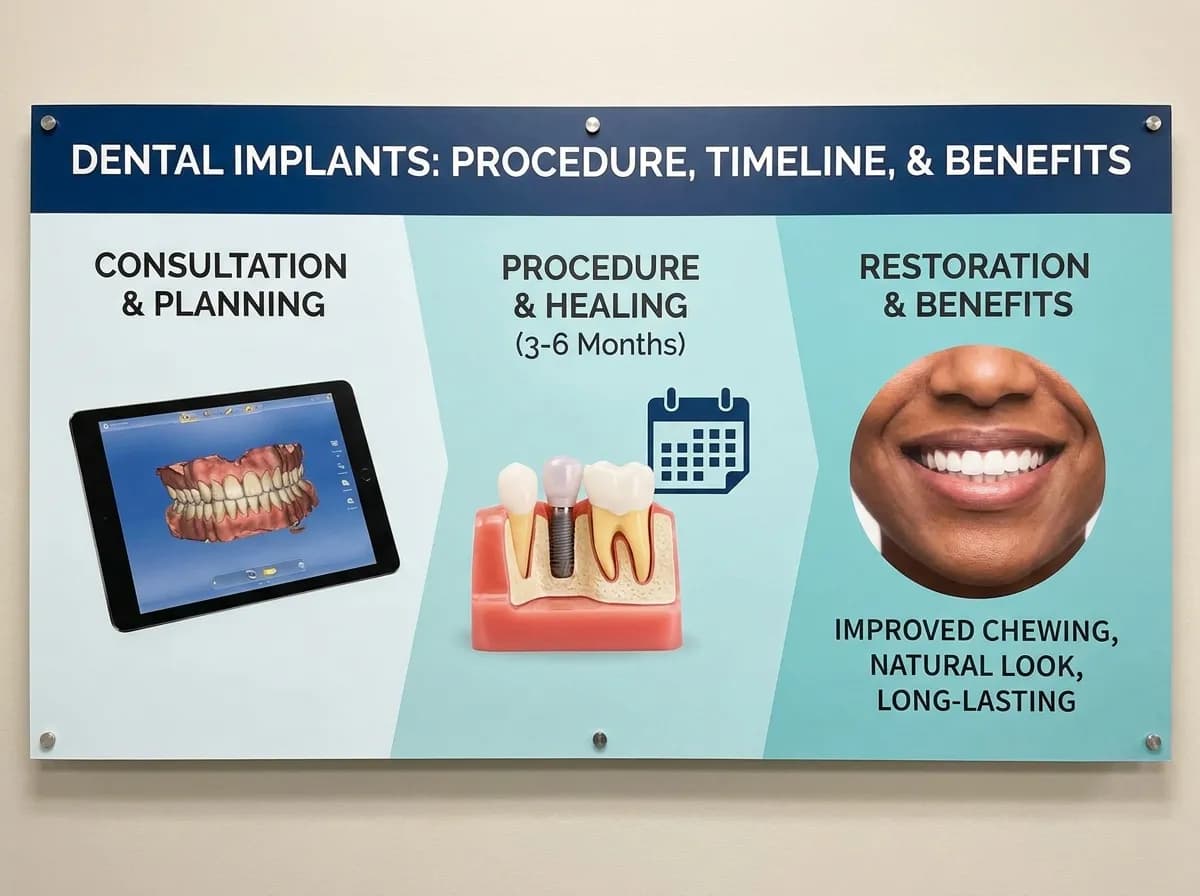
Dental Implants: Everything You Need to Know About the Gold Standard of Tooth Replacement
Losing a tooth can affect more than just the appearance of your smile; it can also impact your chewing, speech, and jaw structure. When it comes to tooth replacement, modern dentists agree that dental implants represent the gold standard of treatment.
In this guide, we discuss what dental implants are, how they prevent jawbone loss, how they compare to traditional alternatives like a dental bridge, and what to expect during the implant recovery timeline.
What Is a Dental Implant?
A dental implant is a small titanium post that is surgically inserted into the jawbone, where it acts as an artificial root for a missing tooth. The implant system consists of three parts:
- Implant Post: The titanium screw that integrates directly with the bone.
- Abutment: A connector piece attached to the top of the post.
- Dental Crown: The custom porcelain prosthetic tooth that sits on top, designed to match your surrounding teeth.
Why Implants are the Gold Standard
Unlike dentures or bridges, which sit on top of the gums or rely on neighboring teeth, implants replace the entire structure of the tooth, including the root.
- Bone Preservation: When a tooth is lost, the jawbone underneath begins to resorb (deteriorate) due to lack of stimulation. An implant post stimulates the bone just like a natural tooth root, preventing bone loss and facial collapse.
- No Damage to Healthy Teeth: A traditional bridge requires grinding down the enamel of the adjacent teeth to support the crown anchors. Implants stand completely on their own, preserving your healthy teeth.
- Longevity and Strength: Implants restore complete chewing power. With proper hygiene, the titanium post can last a lifetime, while the restoration crown may need replacement after 15 years.
The Dental Implant Procedure and Timeline
Getting a dental implant is a multi-step process that takes place over several months.
Step 1: Consult and Preparation
Your surgeon will take 3D CT scans of your jaw to ensure you have adequate bone density. If your jawbone is too thin or soft, you may require a bone graft before the implant can be placed.
Step 2: Implant Placement
The titanium post is surgically placed into your jawbone. You will be numbed with local anesthesia, and sedation options are often available.
Step 3: Osseointegration (3 to 6 Months)
This is the most critical phase. Over several months, the titanium post fuses with your jawbone in a biological process called osseointegration. A temporary crown or bridge can be worn during this period so you do not have a gap in your teeth.
Step 4: Abutment and Crown Placement
Once integration is complete, the dentist attaches the abutment. An impression is taken, and a custom crown is fabricated and screwed or cemented onto the abutment, completing the restoration.
Dental Bridge vs. Dental Implant: Which Is Better?
While a dental bridge is a faster treatment (taking just 2 weeks), a dental implant offers superior biological value. A bridge requires permanently compromising two healthy teeth, is harder to floss, and needs replacement every 10 years. An implant stands alone and preserves the bone structure.
What to Expect During Implant Recovery
Surprisingly, most patients report that recovering from an implant placement involves less discomfort than recovering from a standard tooth extraction.
During the first 3 to 7 days, you may experience minor swelling, bruising, and mild soreness, which is easily managed with over-the-counter pain relievers. Stick to soft foods (like smoothies, soups, and yogurt) and avoid brushing the surgical site directly for the first week to allow the gums to heal.
Explore Dental Options with Dental Shelter
If you have a missing tooth or are planning an extraction, you can map out your tooth replacement concerns using Dental Shelter's free 3D mouth model. Select the missing tooth to document it, and view information that helps you understand the process.
Ready to consult with a specialist? Find verified oral surgeons and implant dentists near you by browsing the directory at First Stop Dental.
Frequently Asked Questions
What is the success rate of dental implants?
Dental implants have a highly predictable success rate of 95% to 98% when performed by a qualified professional on a suitable candidate.
Is the dental implant surgery painful?
Local anesthesia keeps the procedure completely painless. Most patients describe the post-operative recovery as very manageable, with soreness resolving within a week.
Who is not a good candidate for dental implants?
Uncontrolled diabetes, active gum disease, heavy smoking, or undergoing radiation therapy to the head/neck can interfere with bone healing and increase the risk of implant failure.
How do I care for my dental implant?
You care for an implant exactly like a natural tooth: brush twice daily, floss daily, and visit your dentist regularly for cleanings. Although implants cannot decay, the gums around them can still get infected (peri-implantitis) if hygiene is neglected.