
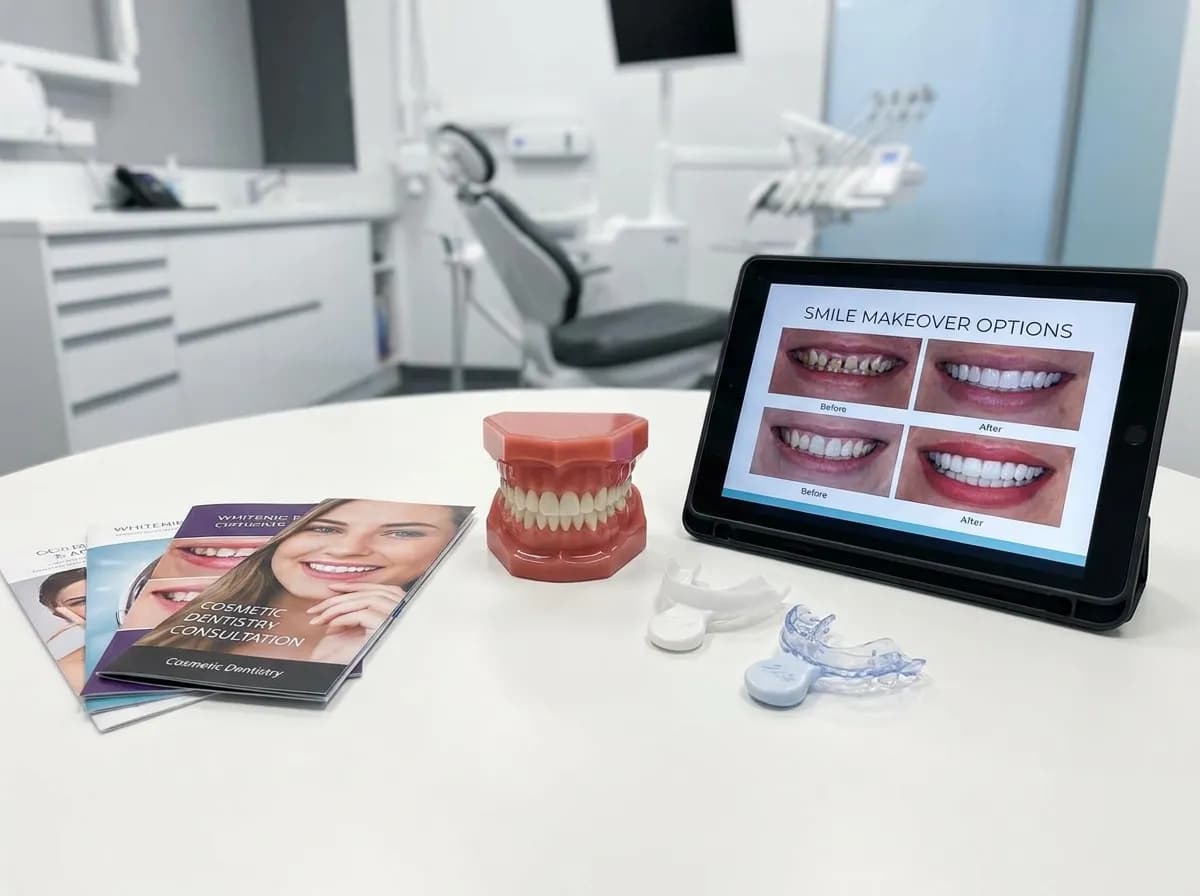
Cosmetic Dentistry Options: Which Smile Makeover Treatment Is Right for You?
A beautiful smile can boost your confidence and leave a lasting impression. If you have chipped, discolored, or misaligned teeth, modern cosmetic dentistry offers a wide range of solutions to help you achieve the look you want.
From quick, affordable procedures like dental bonding to comprehensive treatments like porcelain veneers, a customized smile makeover is more accessible than ever. Here is a clinical guide to your options, their benefits, and how to choose the right path for your budget.
The Most Popular Cosmetic Dental Procedures
Different dental imperfections require different treatments. Below are the three most common procedures performed by cosmetic dentists today.
1. Porcelain Veneers: The Ultimate Transformation
Veneers are ultra-thin shells of medical-grade ceramic that are custom-designed and bonded to the front surfaces of your teeth. They are ideal for correcting:
- Severe tooth discoloration that does not respond to whitening
- Minor gaps or crowding
- Worn, chipped, or misshapen teeth
Porcelain is highly stain-resistant and mimics the natural translucent qualities of real enamel. However, the process is permanent because it requires removing a micro-layer of enamel to accommodate the shell. With good care, veneers can last 10 to 15 years or longer.
2. Dental Bonding: Quick and Cost-Effective
If you have a single chipped tooth or a small gap you want closed quickly, dental bonding is an excellent choice. The dentist applies a tooth-colored composite resin directly to the tooth, shapes it, and hardens it using a specialized light.
Benefits of bonding include:
- Speed: Often completed in a single visit in under an hour.
- Conservative: Requires minimal to no enamel removal.
- Affordability: Significantly less expensive than veneers or crowns.
However, composite resin is not as durable as porcelain and can stain or chip over time. It typically needs replacement or touch-ups every 5 to 8 years.
3. Teeth Whitening: Brighten Your Smile Instantly
Professional teeth whitening remains the most requested cosmetic treatment. In-office bleaching uses high-concentration peroxide gels activated by specialized lights to lift deep stains from coffee, tea, red wine, and aging.
While over-the-counter strips are available, professional whitening offers faster, more uniform, and longer-lasting results under the supervision of a dental professional.
Porcelain Veneers vs. Dental Bonding: A Direct Comparison
If you are trying to choose between these two restorative options, consider this comparison:
- Veneers: Higher initial investment, requires two or more appointments, is highly stain-resistant, and lasts up to 15 years.
- Dental Bonding: More affordable, completed in one appointment, can stain over time, and lasts up to 8 years.
Planning Your Smile Makeover
A successful smile makeover is custom-tailored to your unique facial features, budget, and oral health. Before starting cosmetic work, a dentist will evaluate your teeth and gums to ensure they are healthy. Active issues like cavities or gum disease must be treated first to build a solid foundation.
Get Started with Dental Shelter
Are you considering cosmetic improvements but unsure which teeth need treatment? Use the free 3D mouth model at Dental Shelter. Rotate the interactive model, select the specific teeth you are concerned about, and select your goals (like closing gaps, fixing chips, or whitening). This generates a visual map you can bring to your cosmetic consultation.
Once you are ready to consult a professional, browse verified dentists in your area at First Stop Dental to schedule your smile makeover consultation.
Frequently Asked Questions
Does insurance cover cosmetic dentistry?
Generally, dental insurance does not cover purely cosmetic treatments (like veneers or teeth whitening). However, if a procedure is restorative—such as dental bonding to repair a tooth damaged by an injury—partial coverage may apply.
Can I get veneers if I have crowded teeth?
Yes. For minor crowding, veneers can create a straight appearance, often called "instant orthodontics." However, for severe misalignment, orthodontic treatment (like aligners or braces) is usually recommended first.
Do porcelain veneers stain?
Porcelain is non-porous and highly resistant to staining compared to natural teeth or composite bonding. You can enjoy coffee and tea without worrying about discoloring your veneers.
Is dental bonding painful?
No. Dental bonding is typically painless and usually does not require local anesthesia unless it is being used to fill a cavity or repair a sensitive area near the nerve.