What to Do for a Chipped, Cracked, or Broken Tooth: Repair Options & Immediate Action
Accidents happen. Whether you bit down on a hard piece of candy, suffered a sports injury, or had an older filling fail, a chipped or cracked tooth can be a source of panic.
How you handle the first few hours after tooth damage can significantly affect whether the tooth can be saved. In this guide, we layout the immediate steps to take, the symptoms of a cracked tooth, and the most common chipped tooth repair options.
Immediate Steps to Take Right After the Incident
If you have just chipped or broken a tooth, follow these steps immediately:
- Rinse Your Mouth: Rinse gently with warm salt water to clean the area and reduce the risk of infection.
- Save the Pieces: If a large chunk of the tooth broke off, save it and keep it moist in a small container of milk or saliva. In some cases, a dentist can reattach it.
- Control Bleeding and Swelling: Apply pressure with a piece of sterile gauze if there is bleeding. Apply a cold compress to the outside of your cheek to minimize swelling.
- Protect Soft Tissues: If the remaining tooth has a sharp or jagged edge, cover it with a piece of sugarless chewing gum or temporary dental wax to keep it from cutting your tongue or cheek.
- Contact an Emergency Dentist: Seek professional care promptly to assess the damage.
Cracked Tooth Symptoms: What to Watch For
While a chipped tooth is usually easy to see, a cracked tooth can be hidden. You might have a micro-fracture running down the root that is invisible to the naked eye.
Common symptoms of a cracked tooth include:
- Sharp pain when biting down, which disappears once the pressure is released.
- Intermittent pain that comes and goes, making it difficult to locate the exact tooth.
- Sensitivity to hot, cold, or sweet foods and drinks.
- Swelling of the gum tissue around the affected tooth.
Common Broken Tooth Repair Options
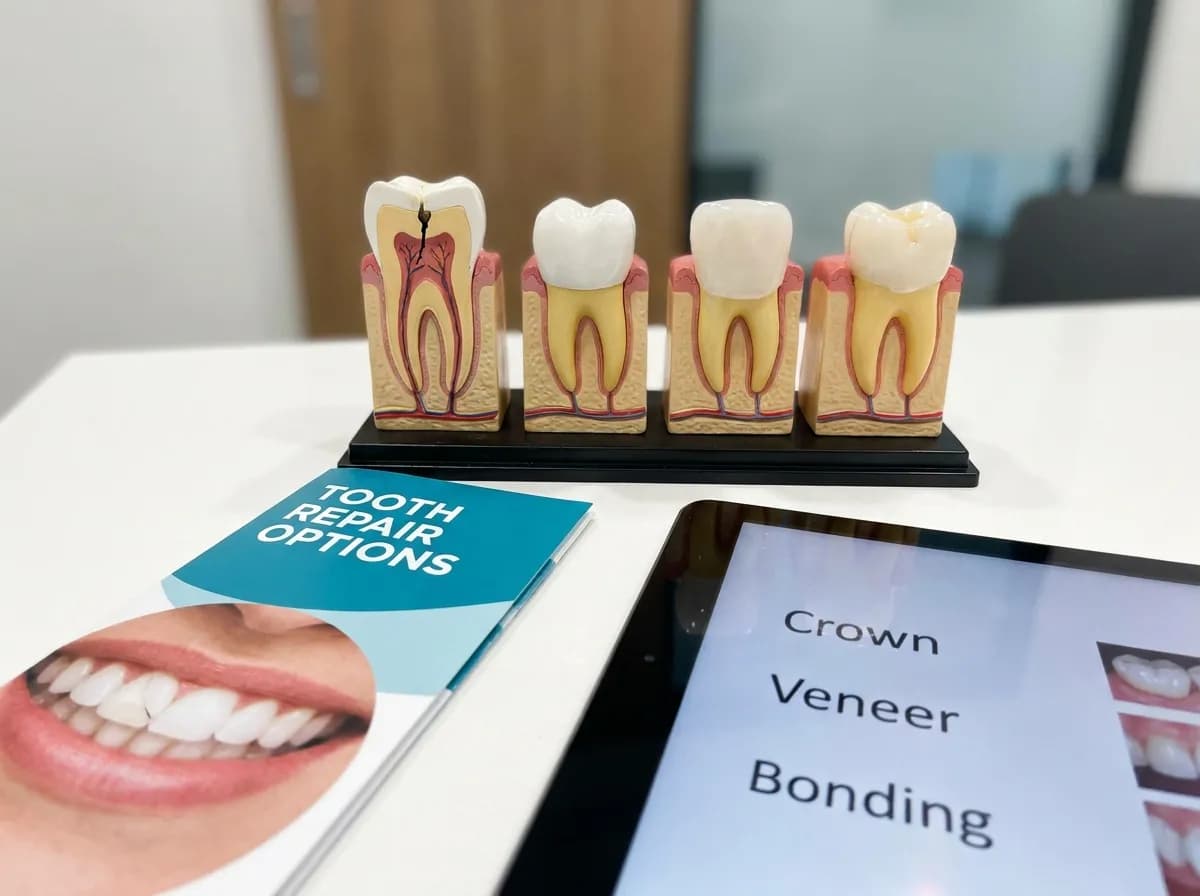
The treatment your dentist recommends will depend on the size and depth of the fracture:
Dental Bonding
For minor chips, dental bonding is the quickest and most conservative treatment. The dentist applies a tooth-colored composite resin, shapes it to match your natural tooth outline, and cures it with a blue light. It is fast, painless, and can be completed in a single visit.
Porcelain Veneers
If a front tooth has a moderate chip that affects its overall appearance, a porcelain veneer can cover the entire front surface. This provides a durable, natural-looking solution that blends seamlessly with your smile.
Dental Crowns
For larger fractures where a significant portion of the tooth structure is lost, a dental crown is necessary. The crown caps the remaining tooth structure, protecting it from splitting further and restoring its structural integrity.
Root Canal Therapy
If the crack extends deep enough to expose the dental pulp (nerve), you will experience severe, throbbing pain. A root canal is required to remove the exposed nerve, followed by a crown to restore the tooth.
Use Dental Shelter in a Dental Emergency
If you have chipped or cracked a tooth, open the free 3D mouth model at Dental Shelter. Use the model to mark the exact tooth that was damaged, select the type of damage (chip, crack, or fracture), and document any sensitivity. You can save this information to show the dentist at your visit.
To secure an urgent appointment with an **emergency dentist**, search the verified listings at First Stop Dental to find a clinic that accepts walk-ins and same-day dental emergencies.
Frequently Asked Questions
Can a cracked tooth heal on its own?
No. Unlike bones, teeth cannot heal themselves because they lack a blood supply in the outer layers. A crack will continue to spread under the pressure of chewing unless it is stabilized by a dentist.
What is the difference between a chip and a crack?
A chip is the loss of a small piece of enamel, usually on the biting edge of a tooth. A crack is a split or fracture line that runs vertically or horizontally through the tooth structure, which can extend into the root.
Is a chipped tooth considered a dental emergency?
If the chip is small and not causing pain, it is not an emergency, but you should still see a dentist soon. If the chip is large, exposes the inner pulp, or causes severe pain and bleeding, it is an emergency and requires immediate attention.
What happens if I leave a chipped tooth untreated?
Even a painless chip can have sharp edges that harbor bacteria, leading to plaque buildup and decay. Over time, the decay can progress to the nerve, causing a painful tooth infection.